A charming miniature library timepiece in a very attractive satinwood case. The eight day single fusee movement with anchor escapement and a heavy lenticular bob pendulum with overslung adjustment and hold fast, is housed in a very attractive five glass case, with very thick bevelled glass panels to the sides and top. The base of the case with carved floral detail and ogee sides.
John Bennett was second generation clock and watchmaker, who established a shop at 65 Cheapside, London. An entrepreneur in the turn of the 19th century spirit he advertised heavily siting his many achievements in a manner that would strike us as somewhat boastful today: watchmaker to the Queen, clockmaker to the Royal Observatory etc. He was Knighted in the 1870’s and was a prominent figure in London Politics, the business continued to trade until 1920 when the distinction shop front with it’s automaton figures of Gog and Magog was dismantled and sent to the Henry Ford Museum in America.
This clock would have been made in London and retailed by Bennett, in the mid 19th Century circa 1850.
23cm H x 17cm W x 12cm D
A charming miniature library timepiece in a very attractive satinwood case. The eight day single fusee movement with anchor escapement and a heavy lenticular bob pendulum with overslung adjustment and hold fast, is housed in a very attractive five glass case, with very thick bevelled glass panels to the sides and top. The base of the case with carved floral detail and ogee sides.
John Bennett was second generation clock and watchmaker, who established a shop at 65 Cheapside, London. An entrepreneur in the turn of the 19th century spirit he advertised heavily siting his many achievements in a manner that would strike us as somewhat boastful today: watchmaker to the Queen, clockmaker to the Royal Observatory etc. He was Knighted in the 1870’s and was a prominent figure in London Politics, the business continued to trade until 1920 when the distinction shop front with it’s automaton figures of Gog and Magog was dismantled and sent to the Henry Ford Museum in America.
This clock would have been made in London and retailed by Bennett, in the mid 19th Century circa 1850.
23cm H x 17cm W x 12cm D

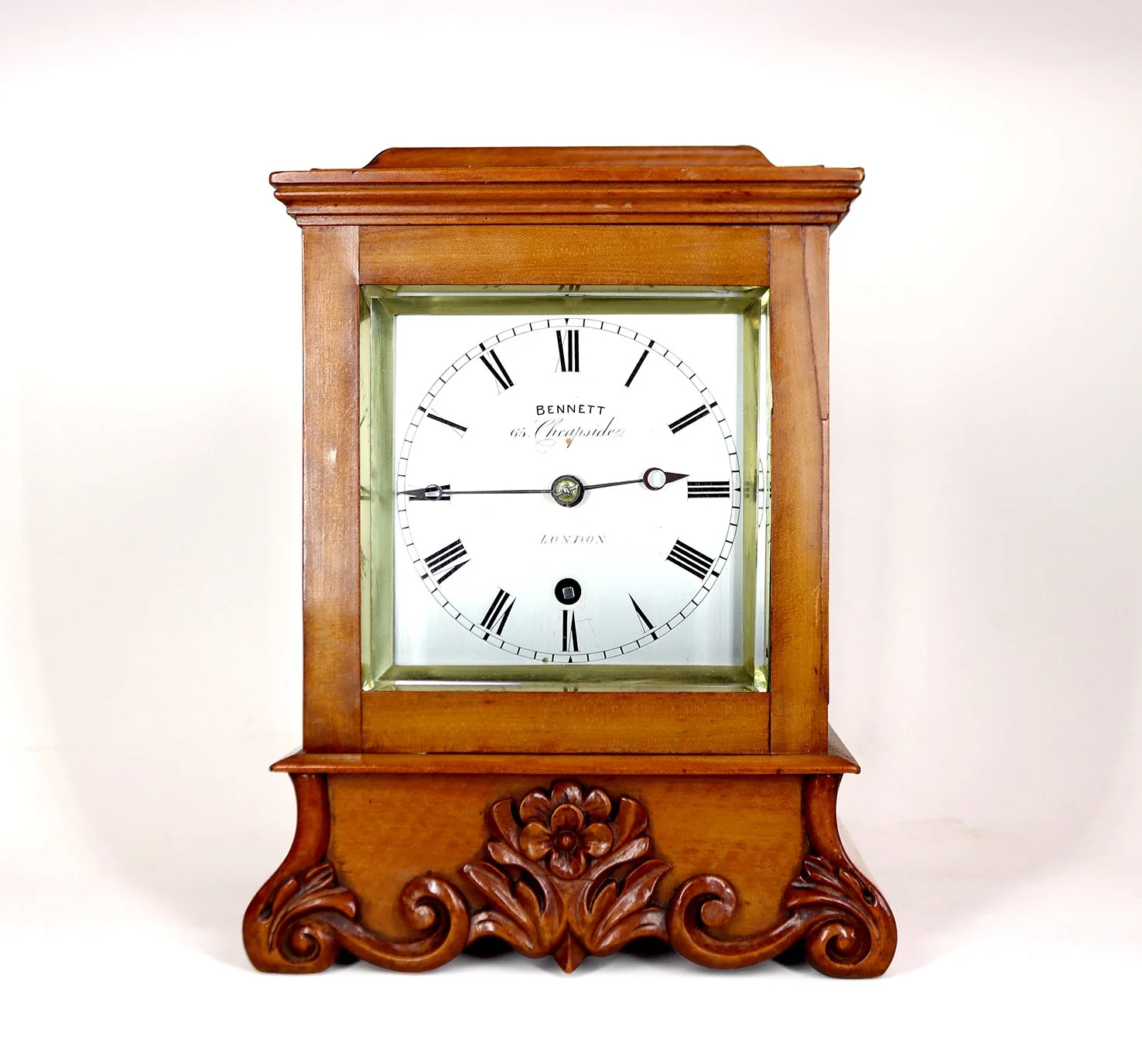 Image 1 of 10
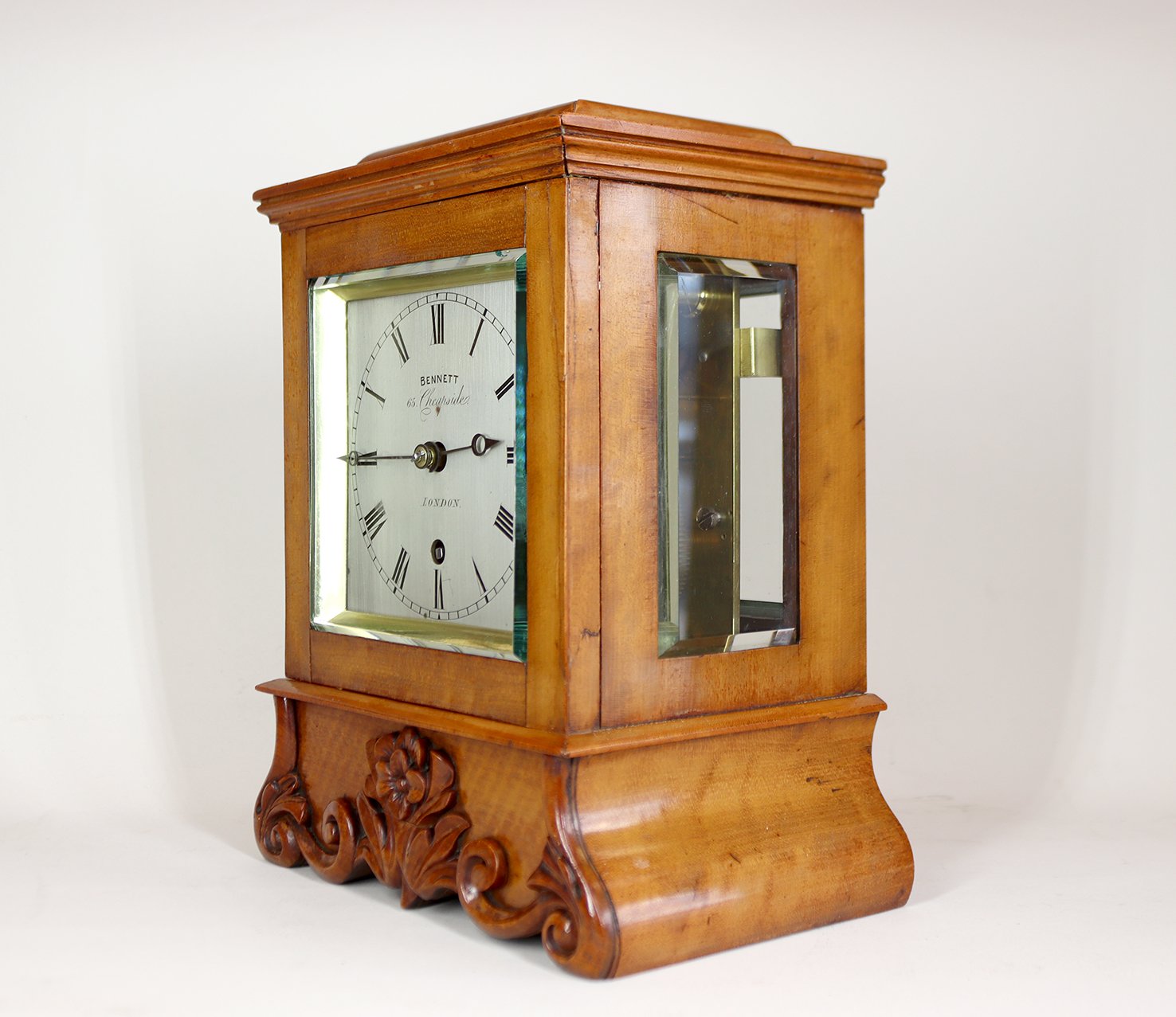 Image 2 of 10
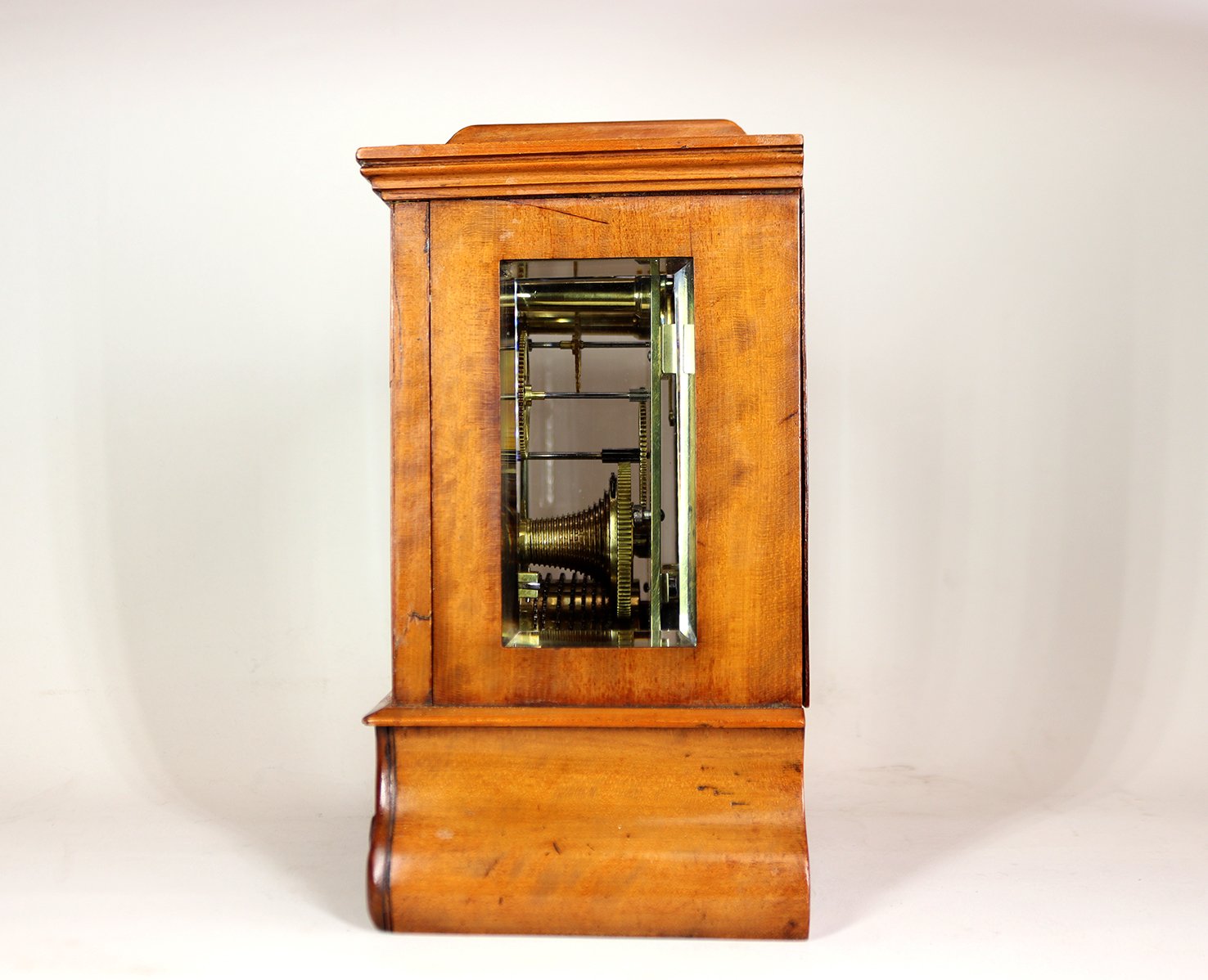 Image 3 of 10
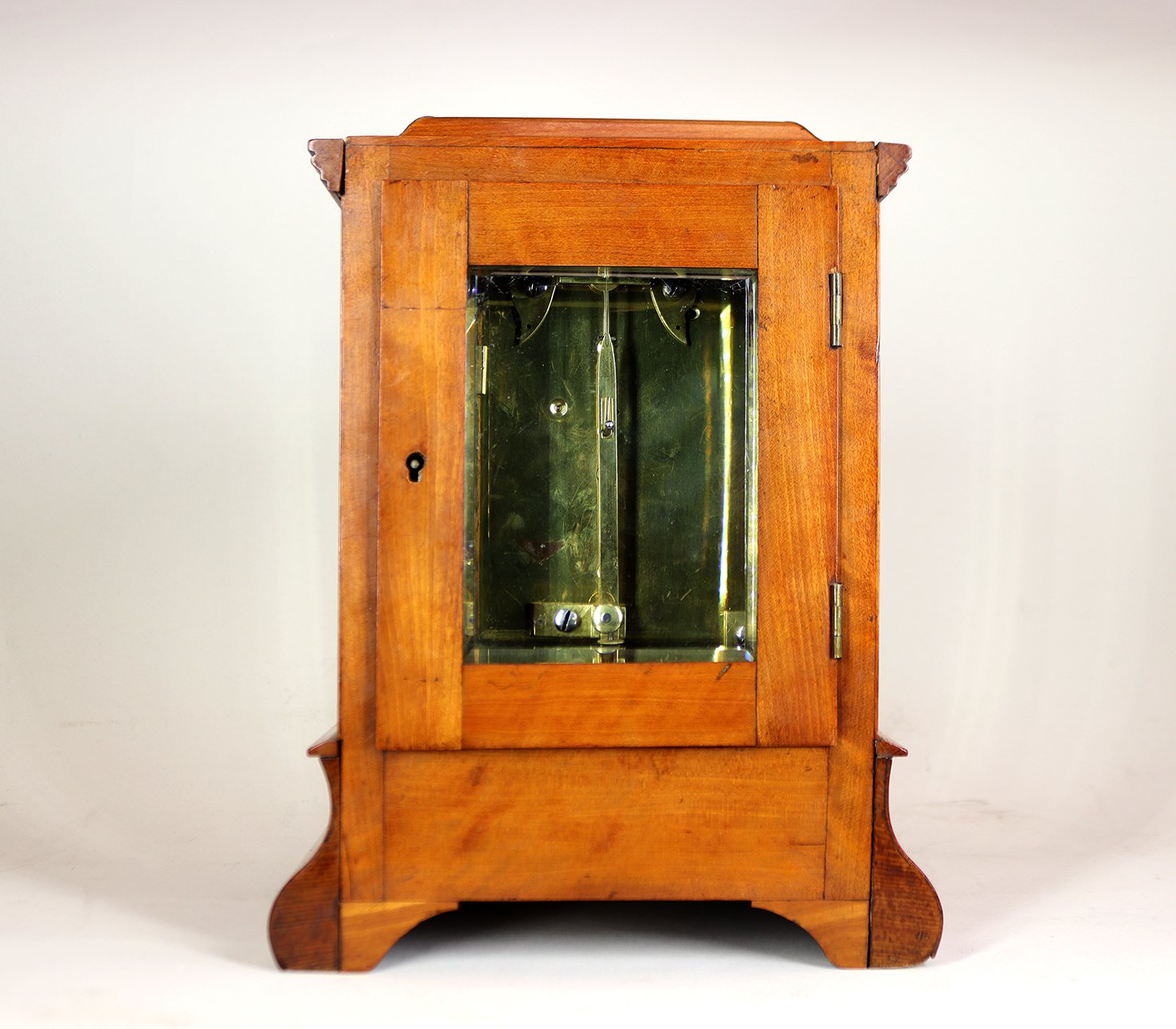 Image 4 of 10
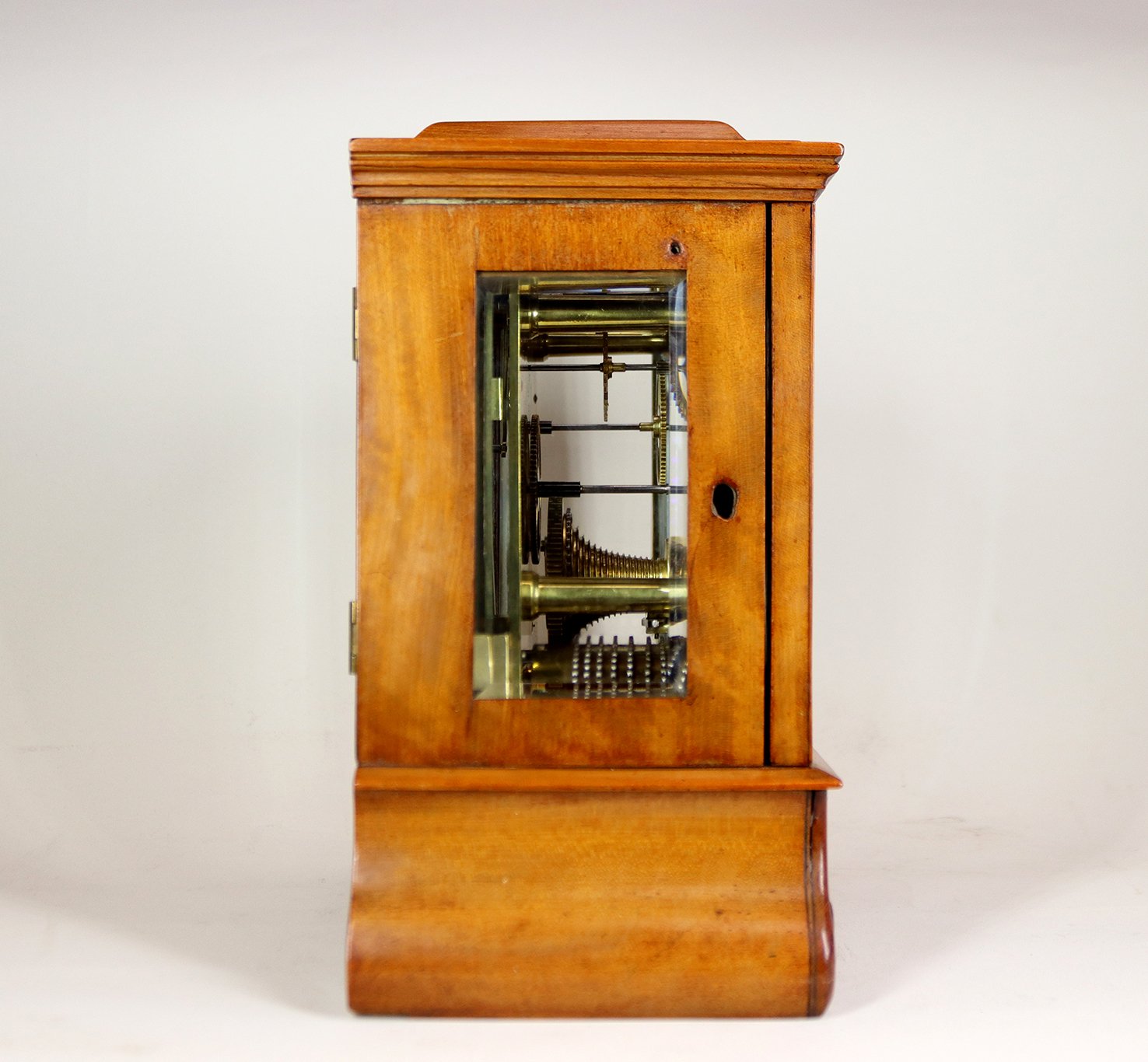 Image 5 of 10
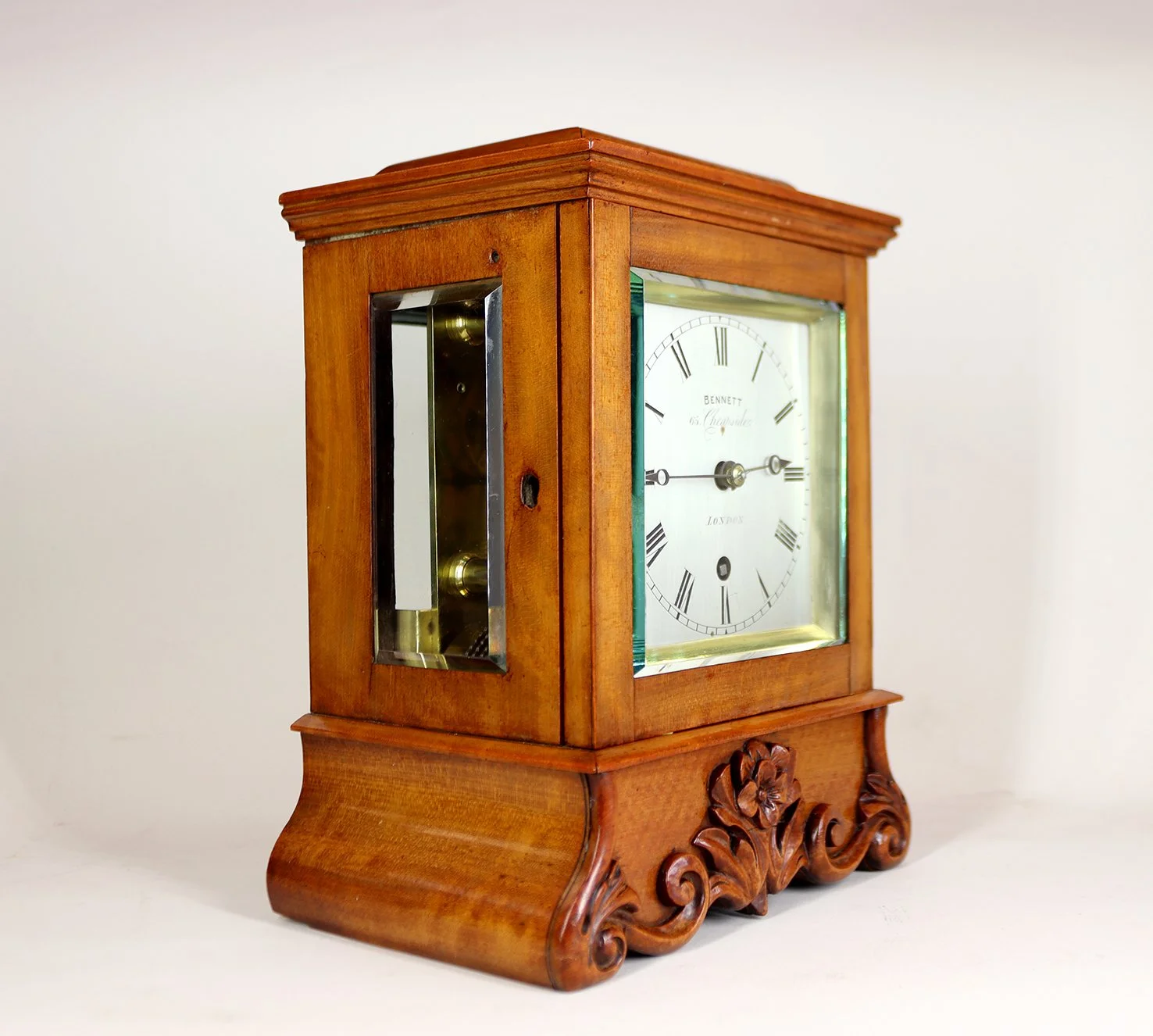 Image 6 of 10
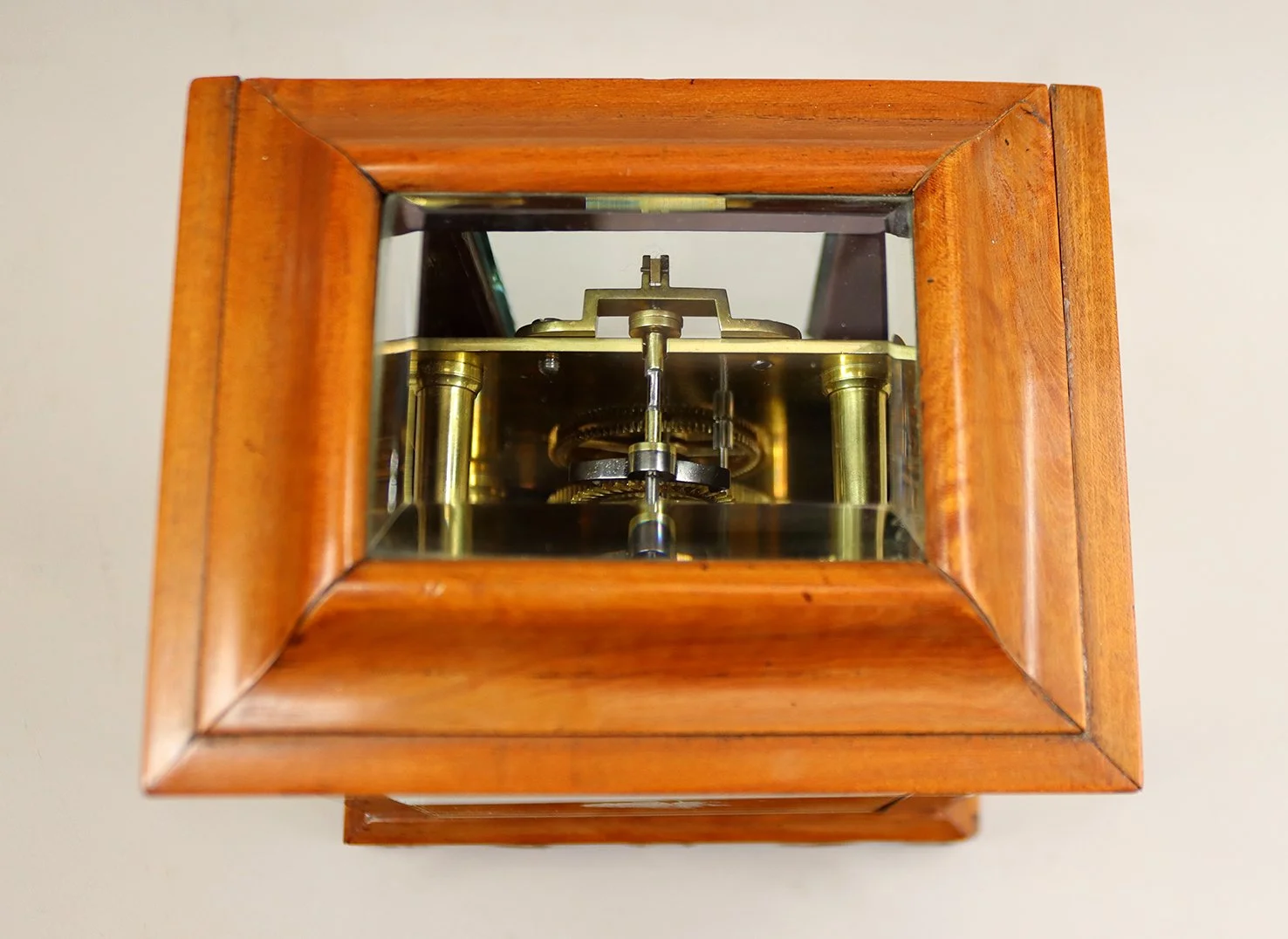 Image 7 of 10
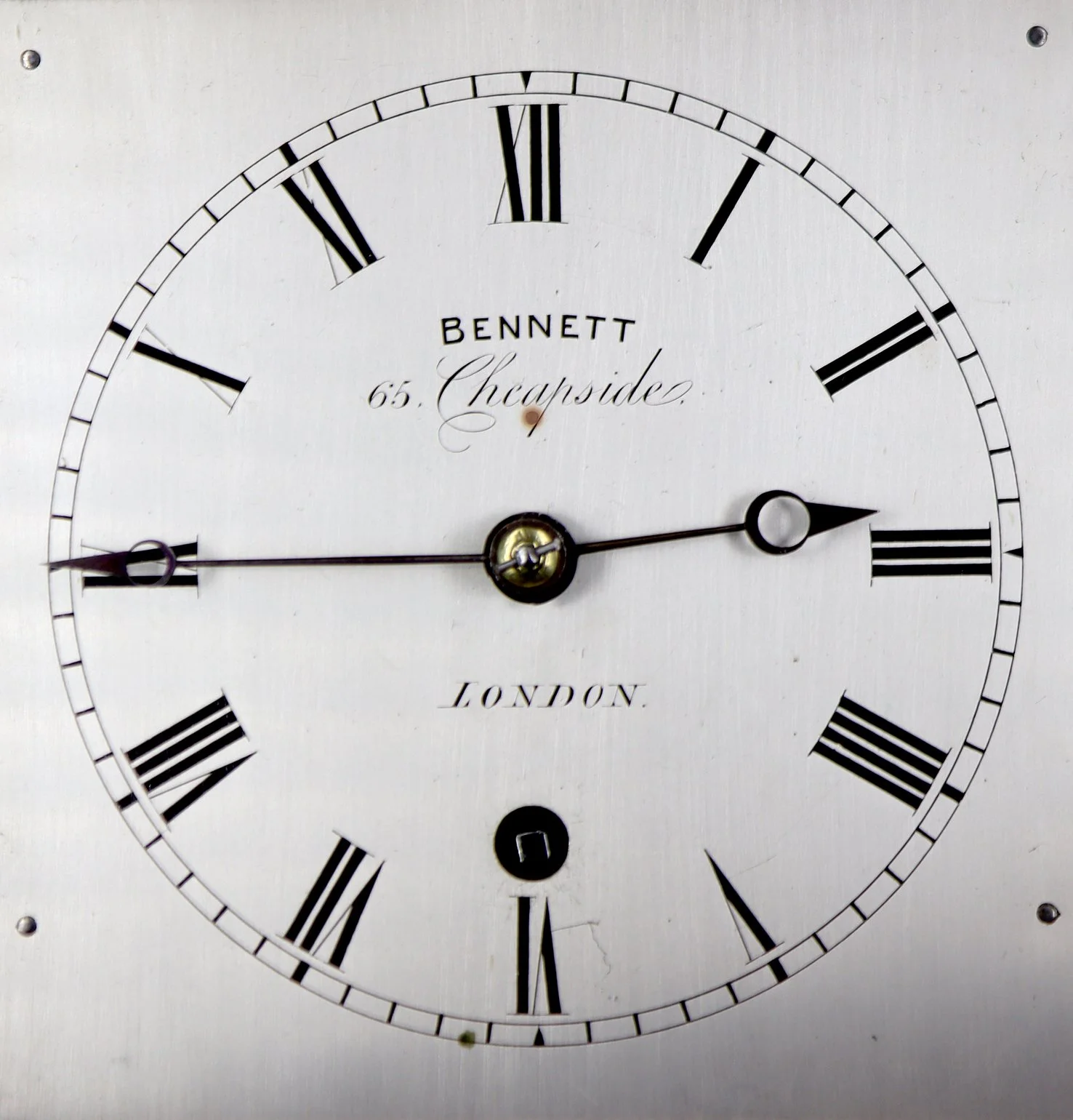 Image 8 of 10
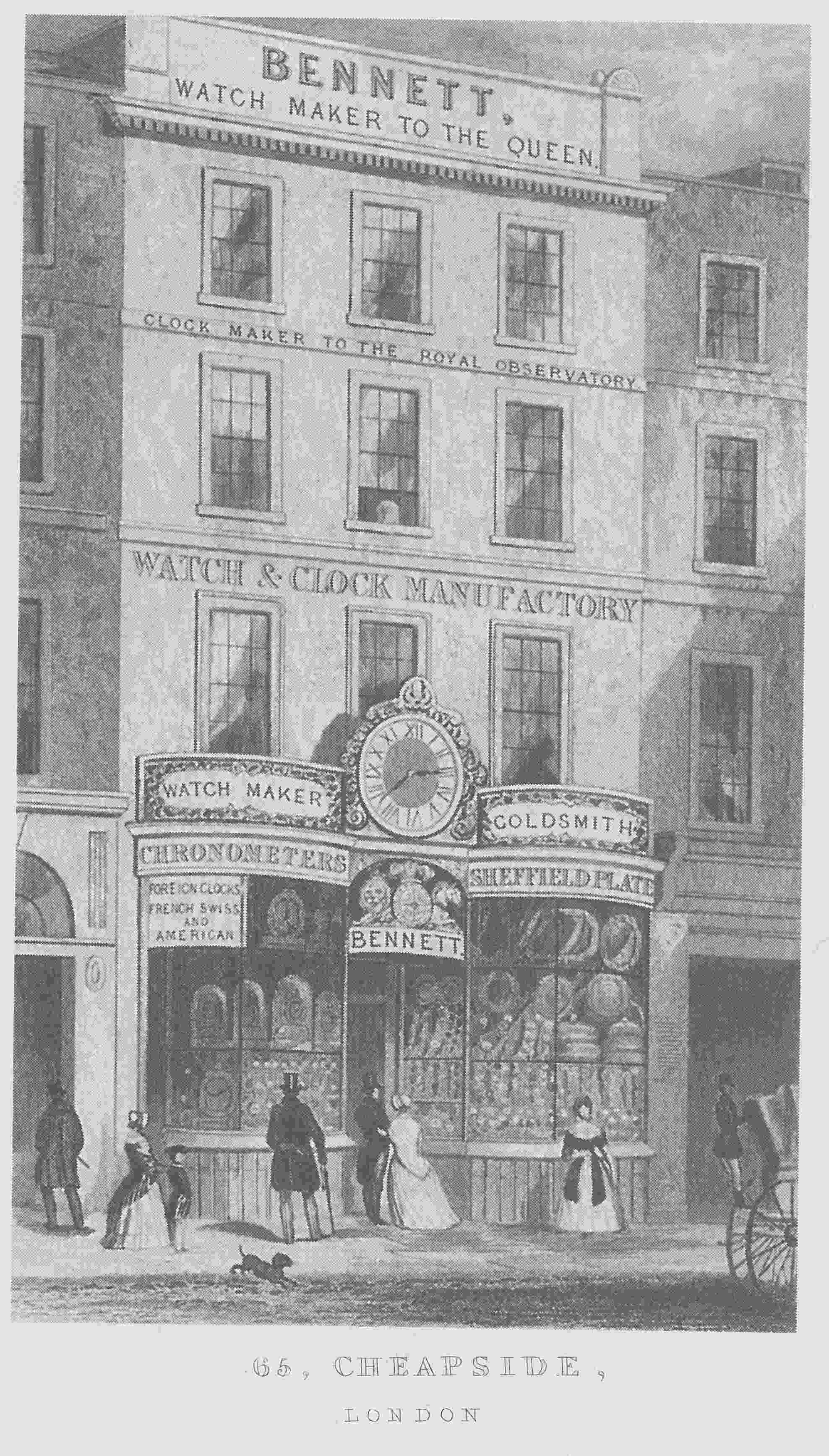 Image 9 of 10
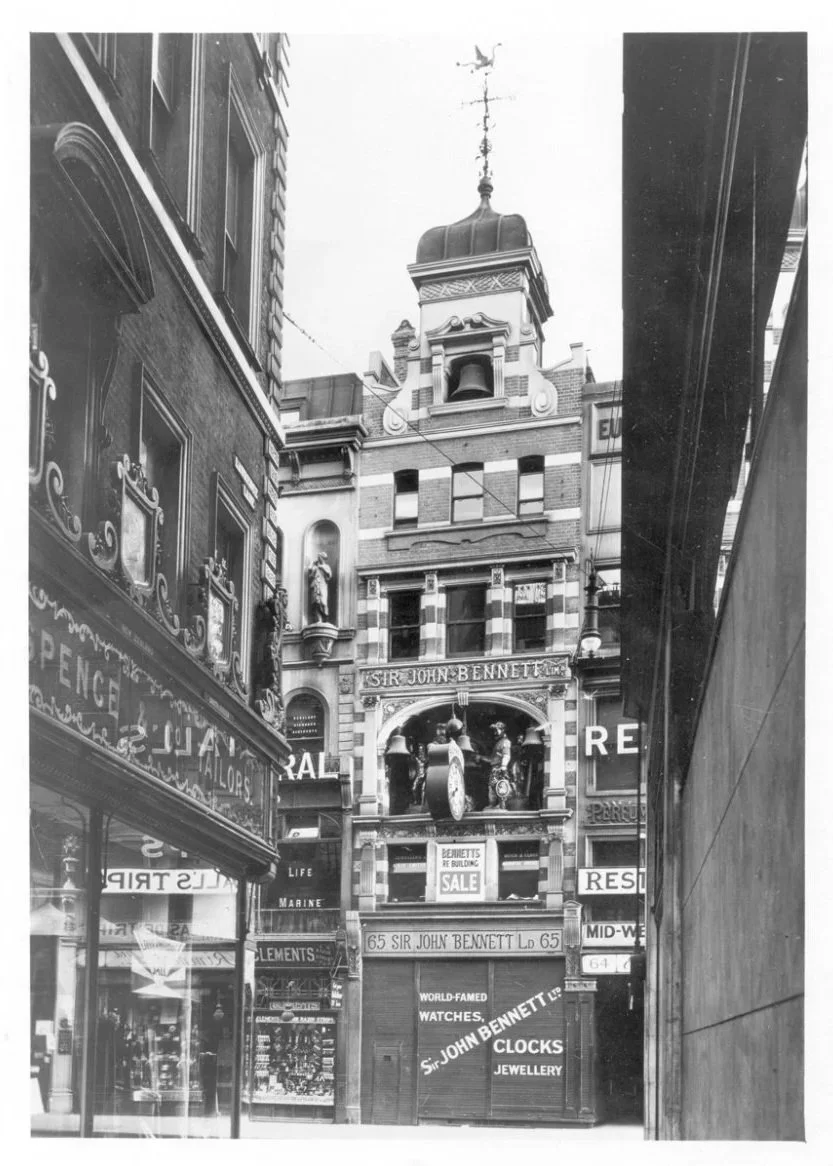 Image 10 of 10