A very fine English twin fusee mantel clock in the Rococo Revival taste. The eight-day movement strikes on a bell and features a heavy pendulum bob with top adjustment, suspended from a ‘T’-bar suspension in the manner of Benjamin Vulliamy. The bronze case, mounted on a fixed base, is of exceptional quality, displaying remarkably crisp casting and beautifully chased decoration throughout. Notable details include the thick cast sound vents, backed with yellow silk grosgrain.
The gilded dial has an engine-turned centre with a sharply defined Roman chapter ring, surrounded by a guilloche bezel. It is fitted with Payne’s distinctive pierced heart-shaped hands. The movement is signed Payne, 163 New Bond Street.
The model for this case derives from an 18th-century design first created by the maître bronzier Jean-Joseph de Saint-Germain for a clock by Julien Le Roy in the 1750s. We have serviced the Le Roy clock in our workshops and have therefore been able to compare the two cases directly.
The fashion for Rococo, and particularly the Louis XV style, enjoyed renewed popularity in England during the Napoleonic Wars. This revival was, in part, a reaction against the more austere Neoclassical style adopted in post-Revolutionary France. With the French royal family in exile in Britain and the Prince Regent actively celebrating French decorative arts, the Rococo Revival was further popularised in the 1810s and 1820s. In conjunction with the address on the back plate, this suggests the present clock was made between circa 1825 and 1830.
William Payne is first recorded at 62 South Moulton Street, London, in 1816. By 1825, he had moved to 163 New Bond Street, where the firm remained until the 20th century. The company exhibited at the Great Exhibition of 1851. Examples of Payne & Co.’s work are held in the Royal Collection, the Victoria & Albert Museum, and the the collection of the National Trust at Clandon Park, Surrey.
All our clocks come with a two year guarantee.
34cm H x 23cm W x 14.5cm D
A very fine English twin fusee mantel clock in the Rococo Revival taste. The eight-day movement strikes on a bell and features a heavy pendulum bob with top adjustment, suspended from a ‘T’-bar suspension in the manner of Benjamin Vulliamy. The bronze case, mounted on a fixed base, is of exceptional quality, displaying remarkably crisp casting and beautifully chased decoration throughout. Notable details include the thick cast sound vents, backed with yellow silk grosgrain.
The gilded dial has an engine-turned centre with a sharply defined Roman chapter ring, surrounded by a guilloche bezel. It is fitted with Payne’s distinctive pierced heart-shaped hands. The movement is signed Payne, 163 New Bond Street.
The model for this case derives from an 18th-century design first created by the maître bronzier Jean-Joseph de Saint-Germain for a clock by Julien Le Roy in the 1750s. We have serviced the Le Roy clock in our workshops and have therefore been able to compare the two cases directly.
The fashion for Rococo, and particularly the Louis XV style, enjoyed renewed popularity in England during the Napoleonic Wars. This revival was, in part, a reaction against the more austere Neoclassical style adopted in post-Revolutionary France. With the French royal family in exile in Britain and the Prince Regent actively celebrating French decorative arts, the Rococo Revival was further popularised in the 1810s and 1820s. In conjunction with the address on the back plate, this suggests the present clock was made between circa 1825 and 1830.
William Payne is first recorded at 62 South Moulton Street, London, in 1816. By 1825, he had moved to 163 New Bond Street, where the firm remained until the 20th century. The company exhibited at the Great Exhibition of 1851. Examples of Payne & Co.’s work are held in the Royal Collection, the Victoria & Albert Museum, and the the collection of the National Trust at Clandon Park, Surrey.
All our clocks come with a two year guarantee.
34cm H x 23cm W x 14.5cm D

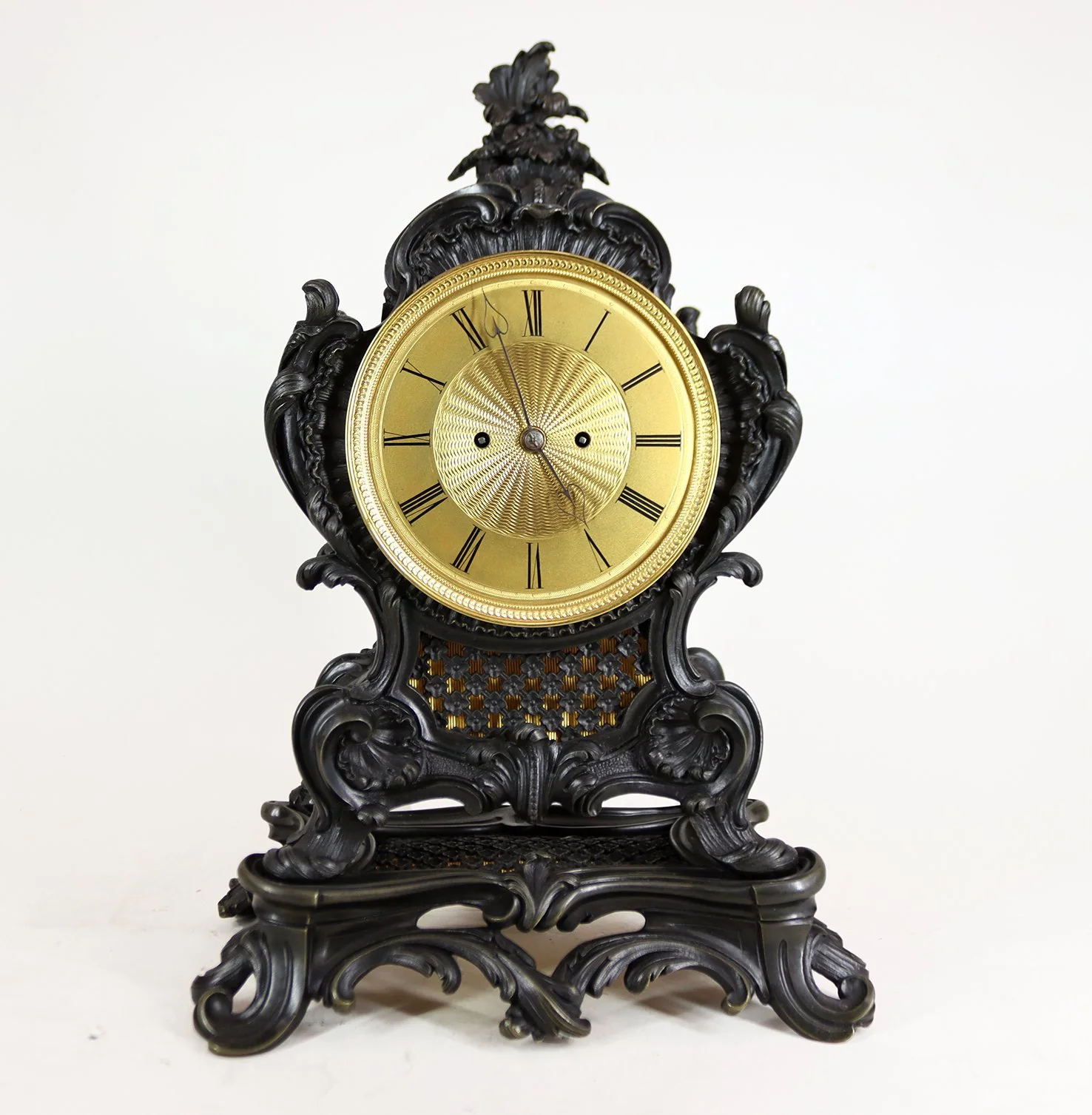 Image 1 of 14
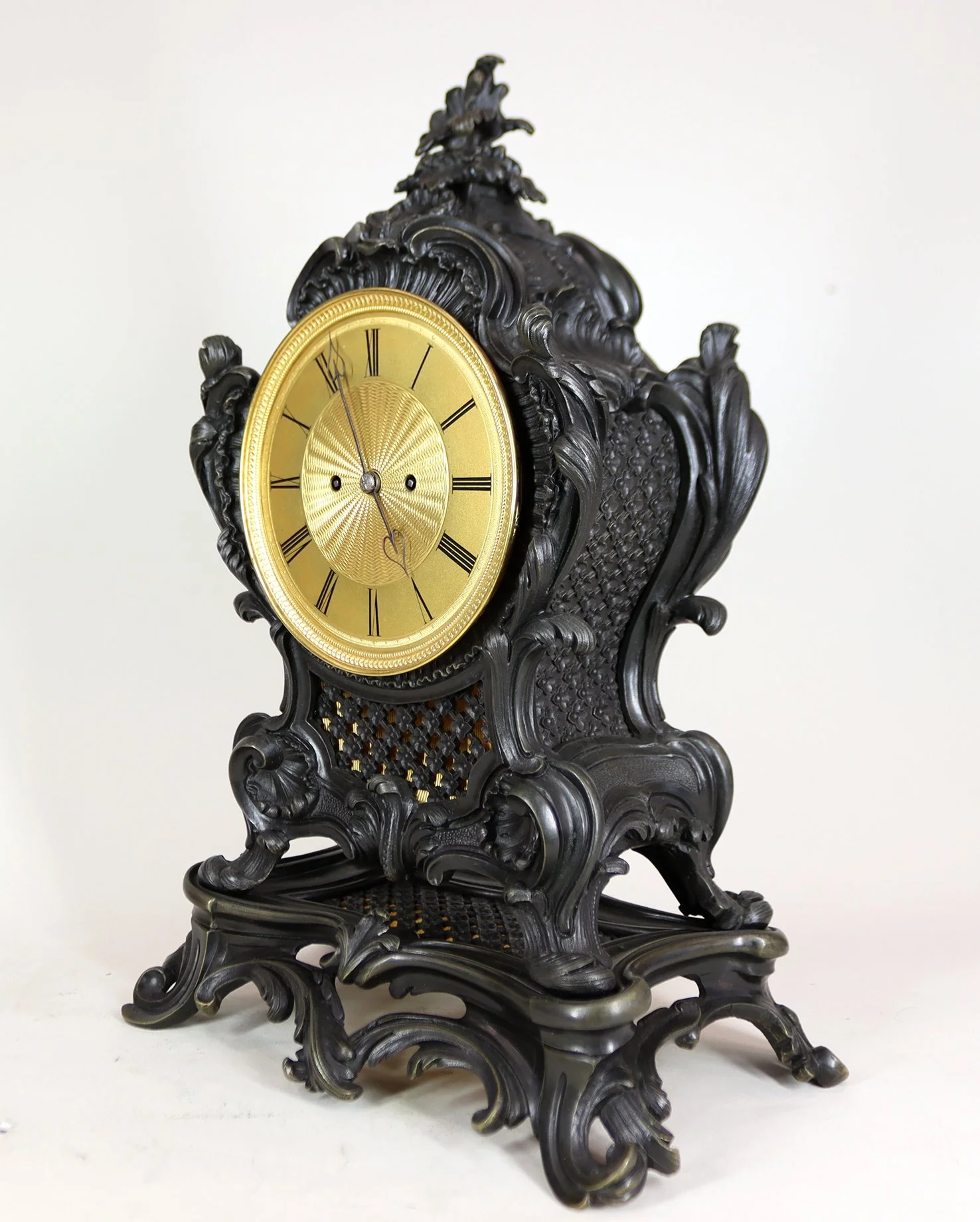 Image 2 of 14
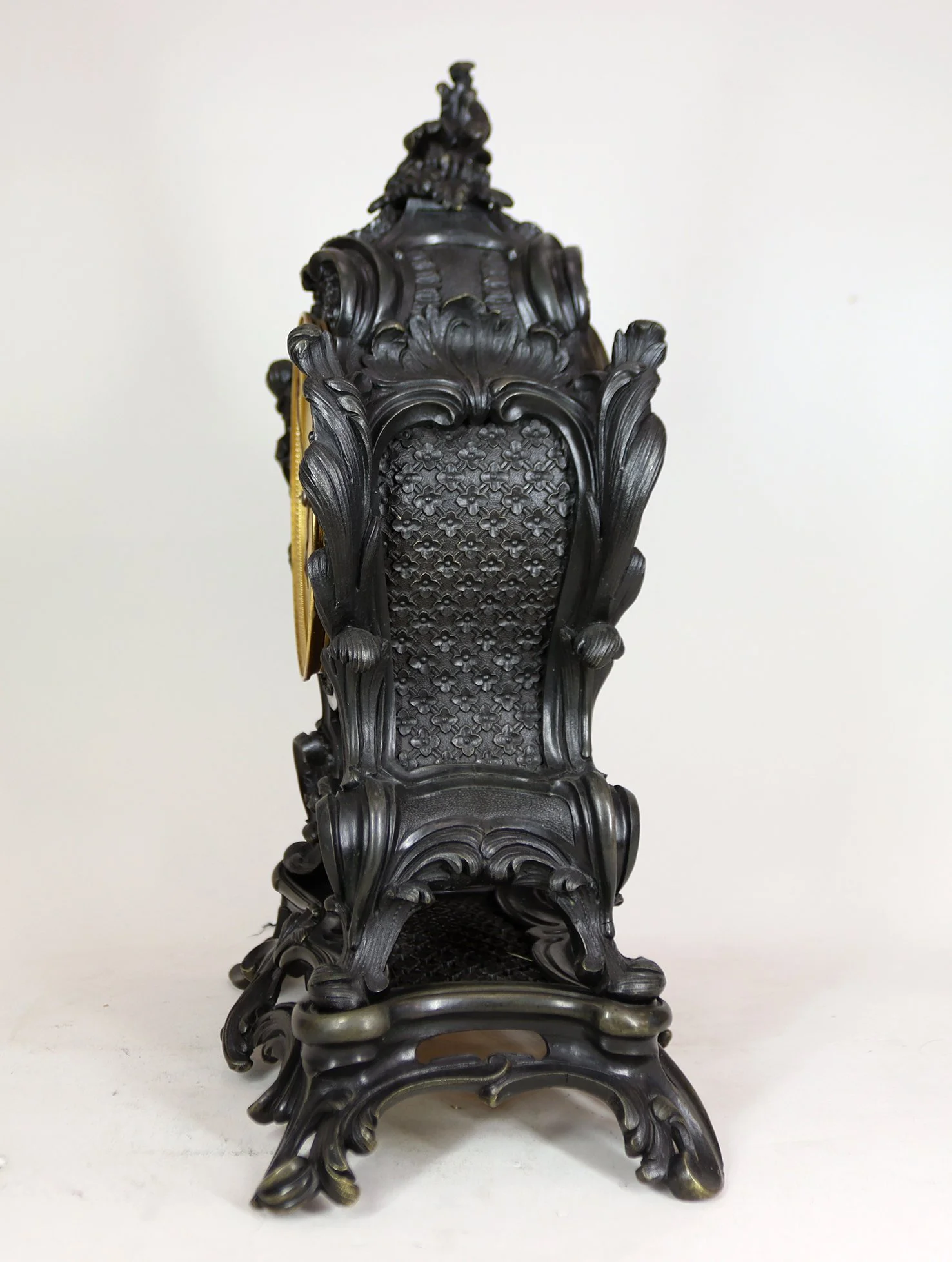 Image 3 of 14
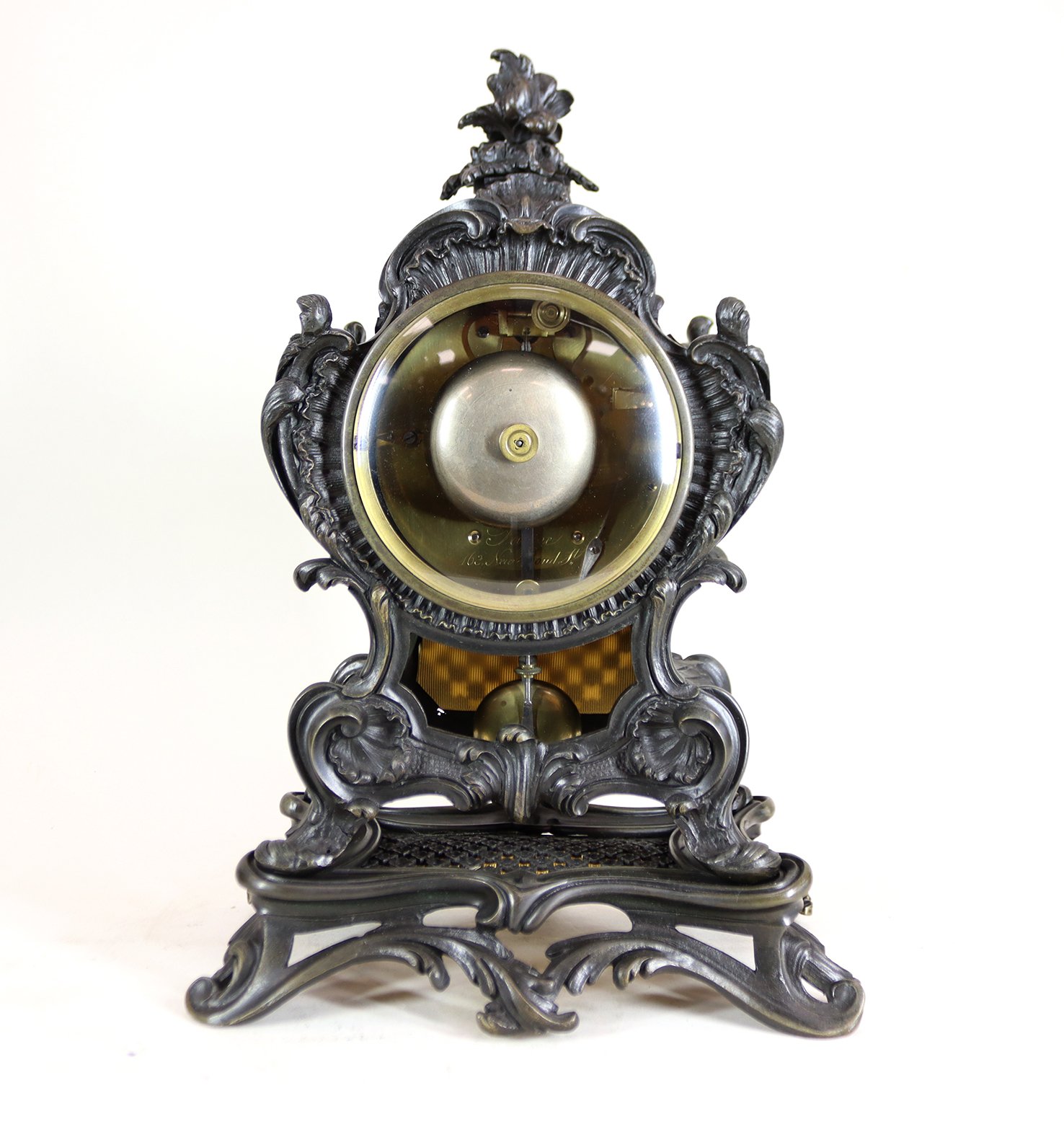 Image 4 of 14
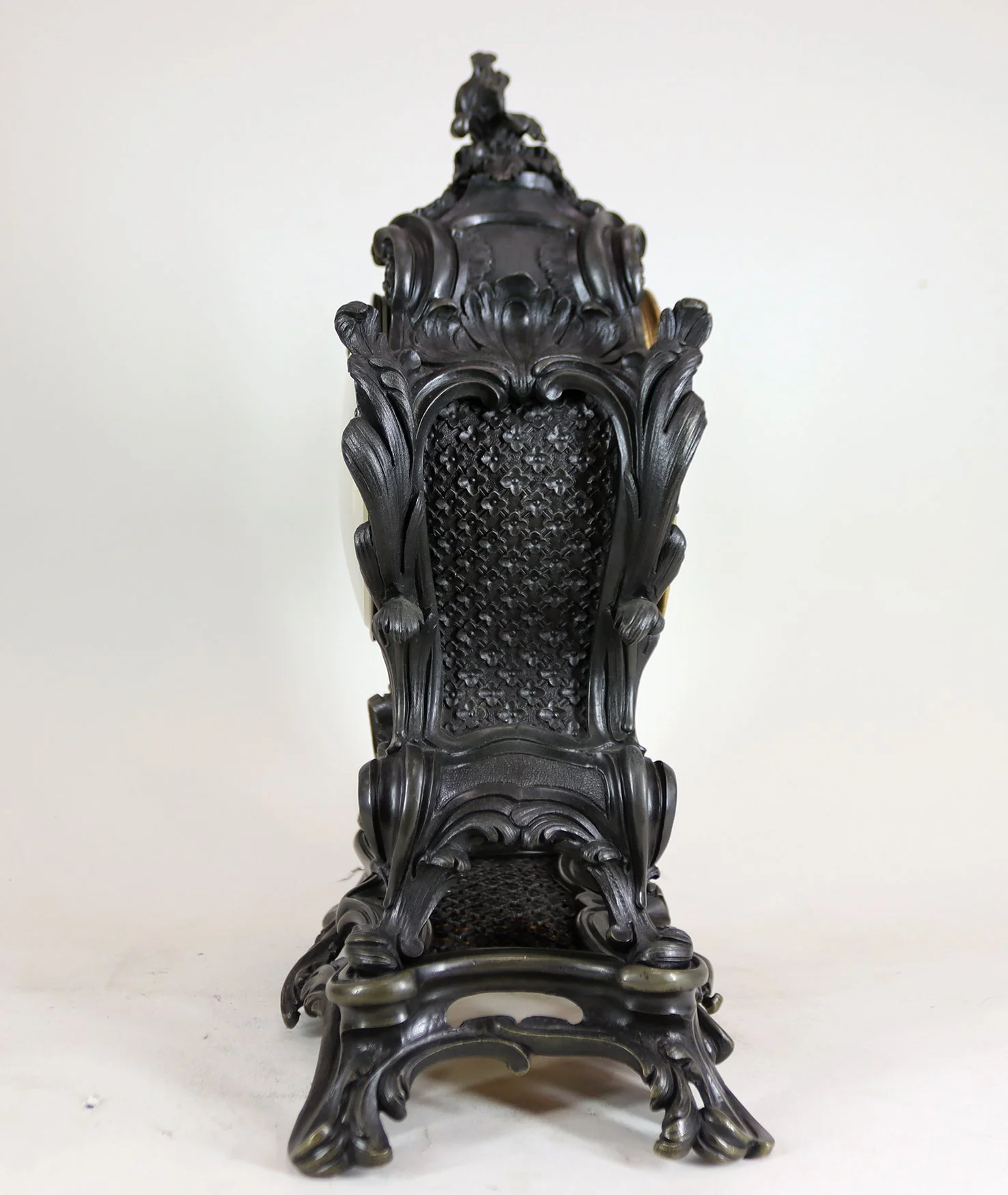 Image 5 of 14
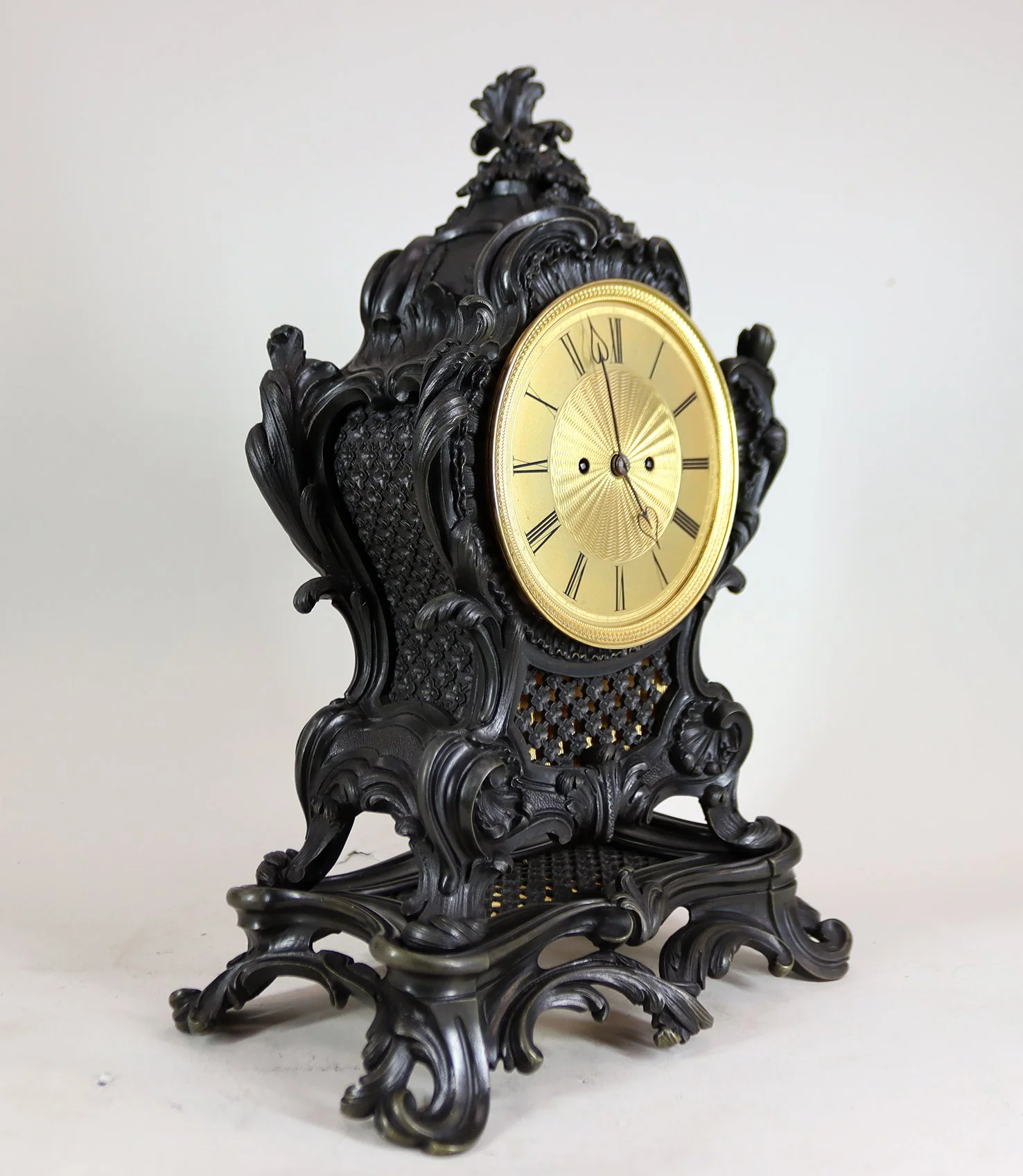 Image 6 of 14
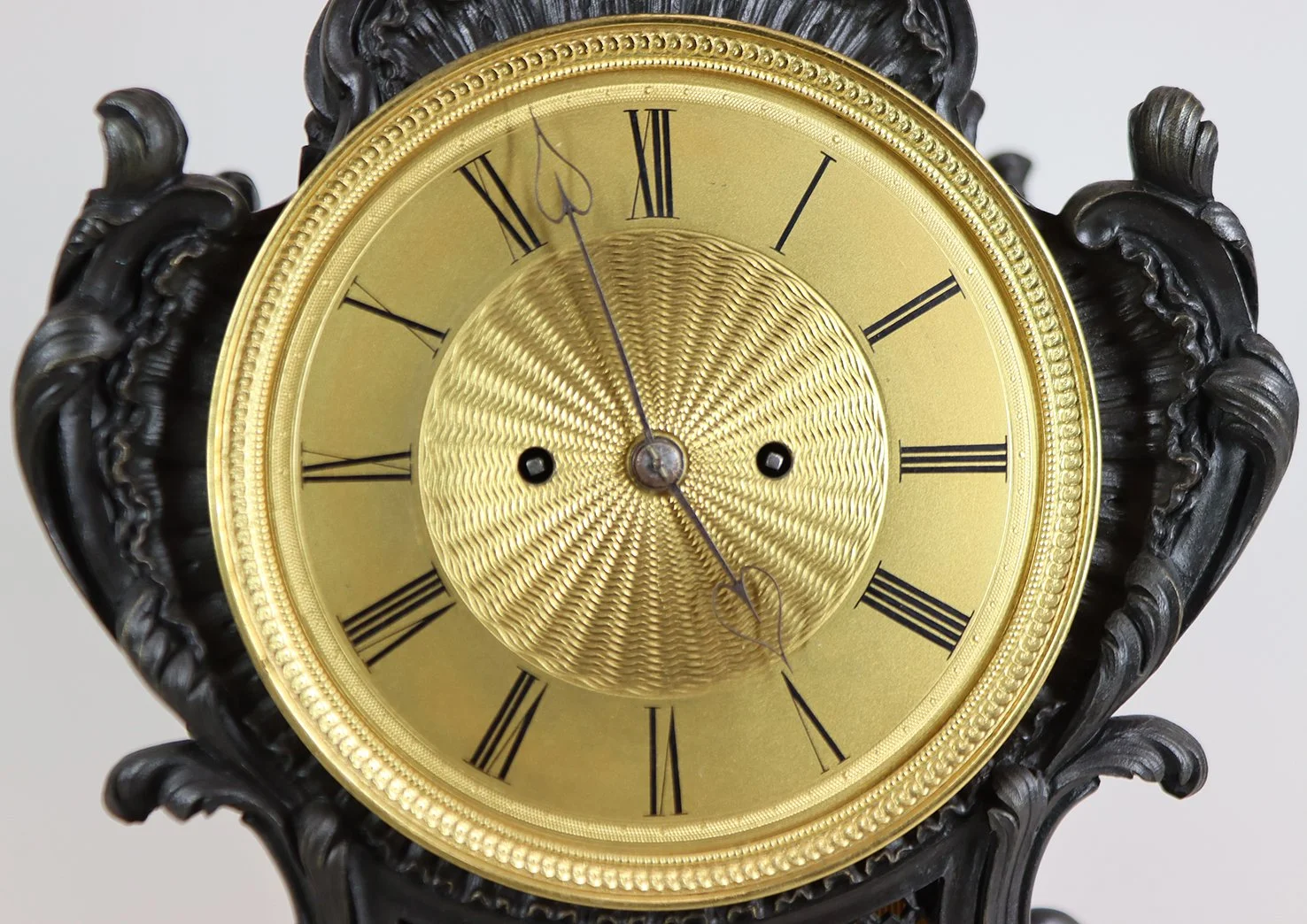 Image 7 of 14
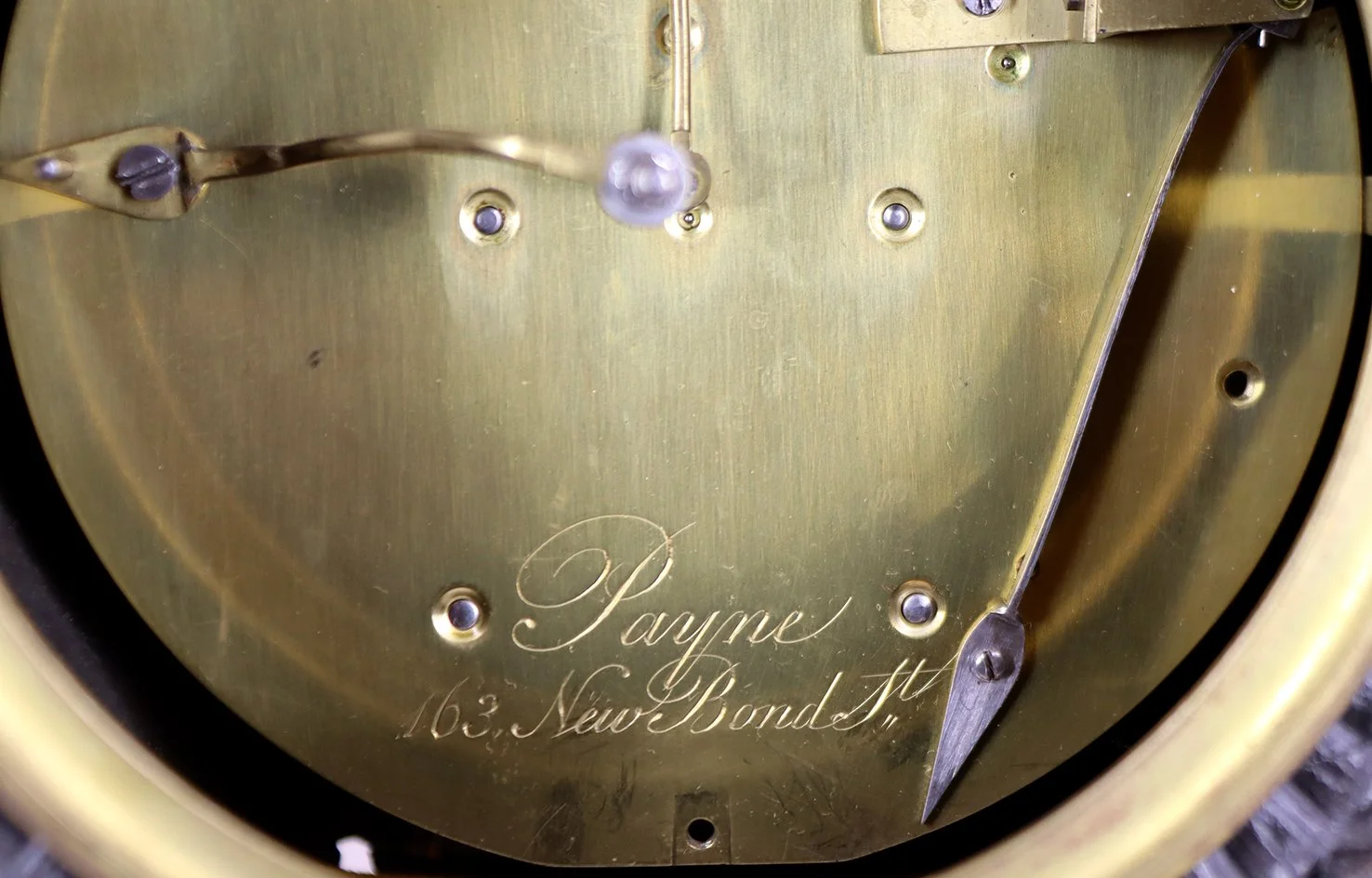 Image 8 of 14
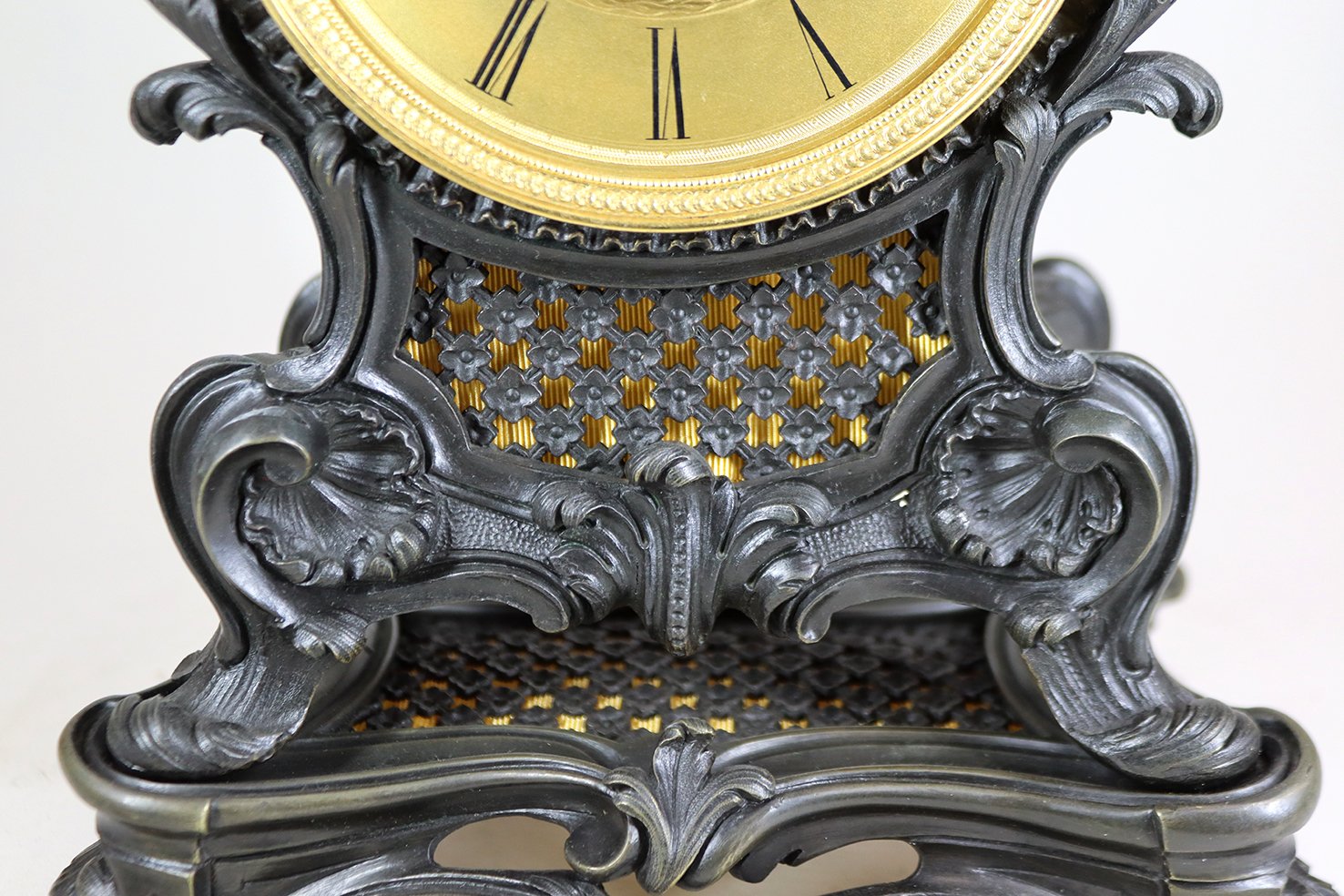 Image 9 of 14
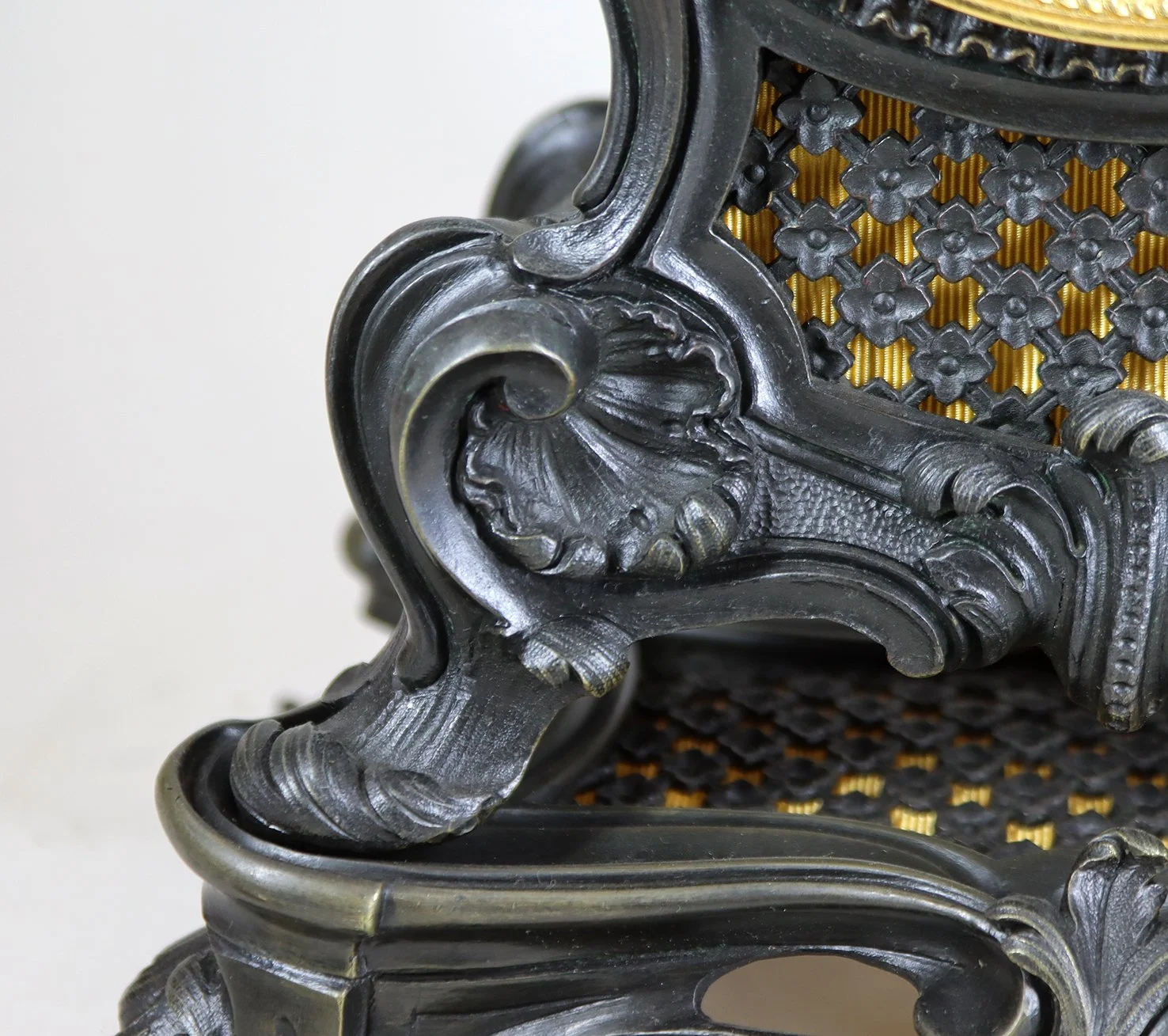 Image 10 of 14
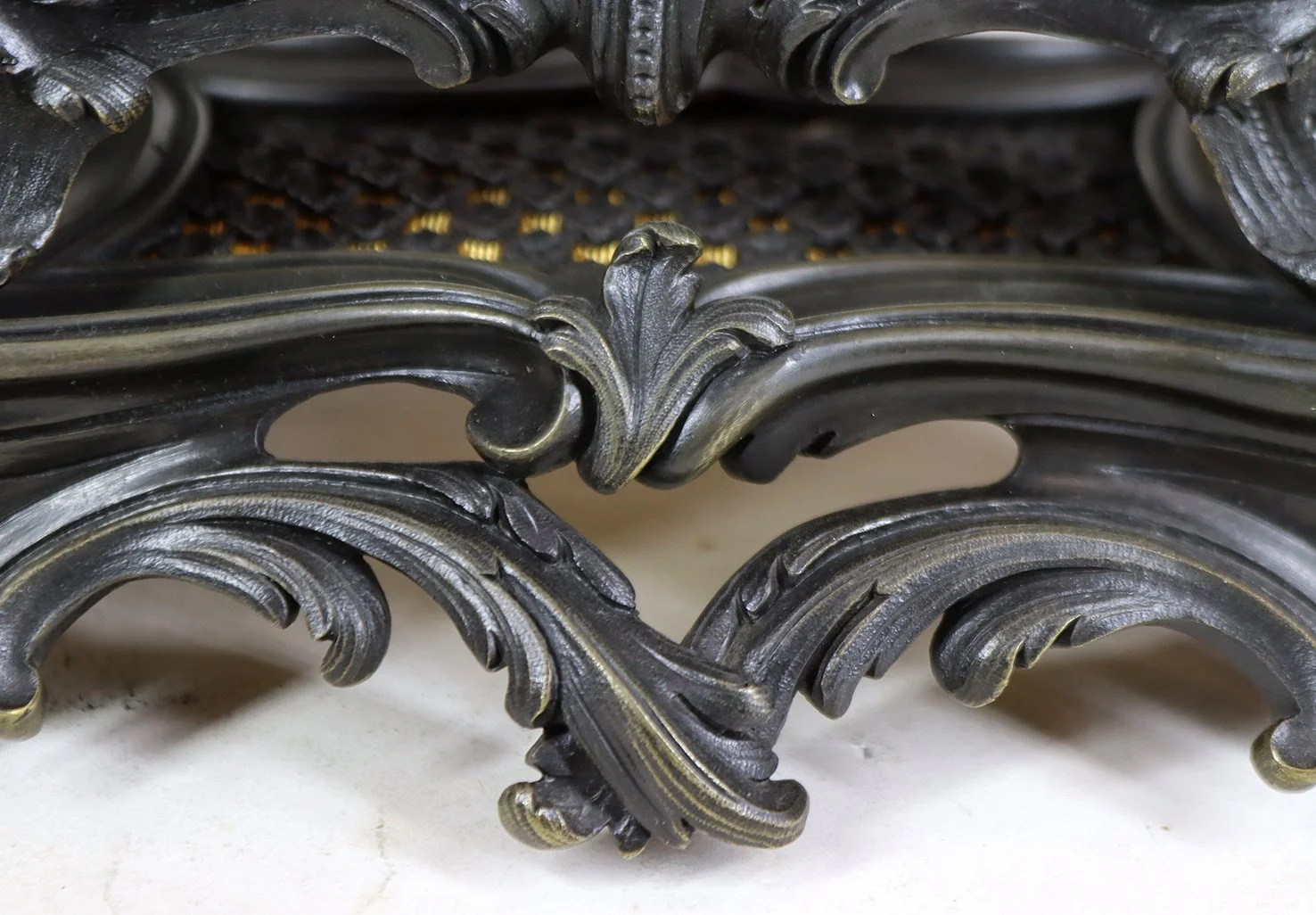 Image 11 of 14
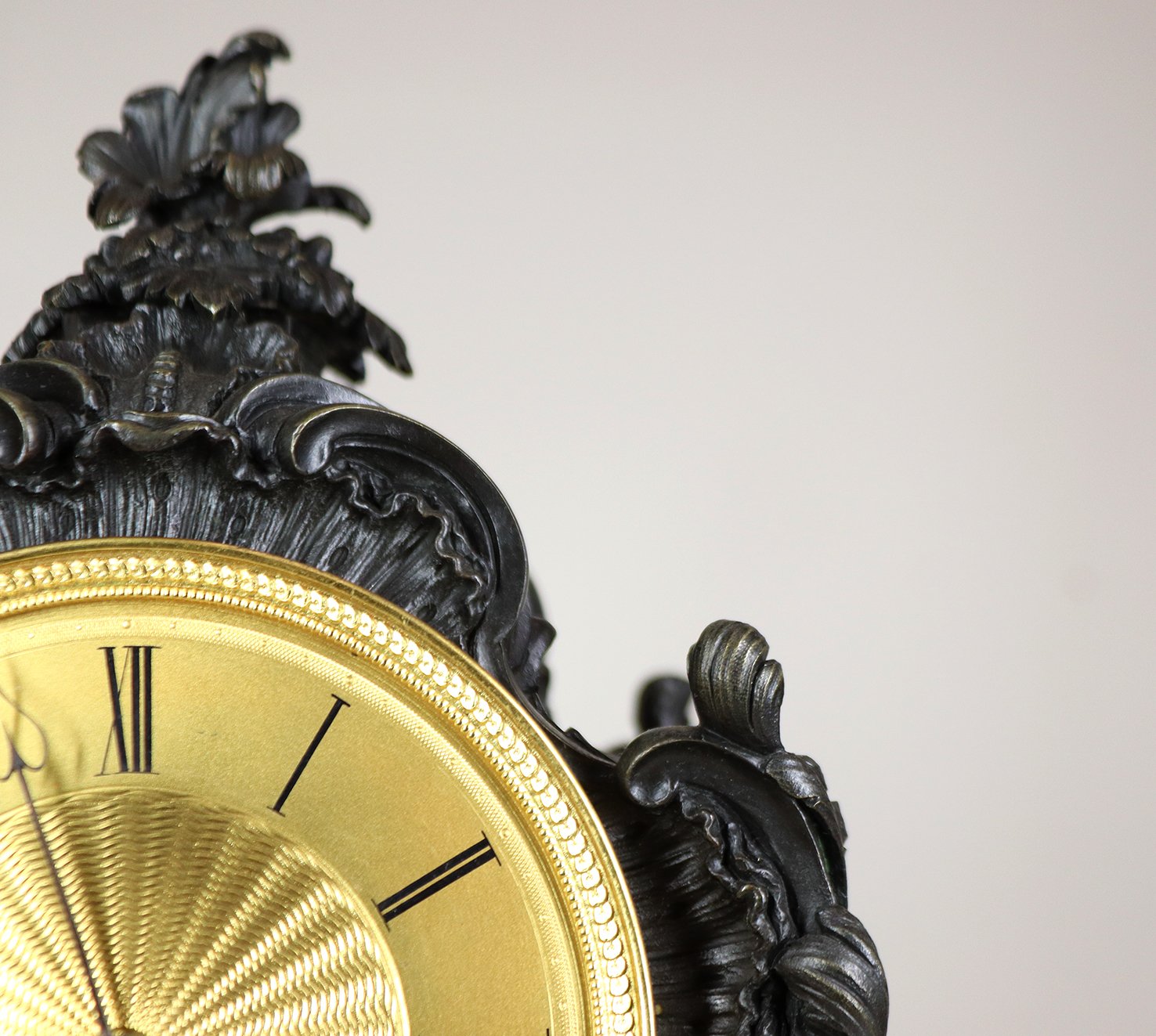 Image 12 of 14
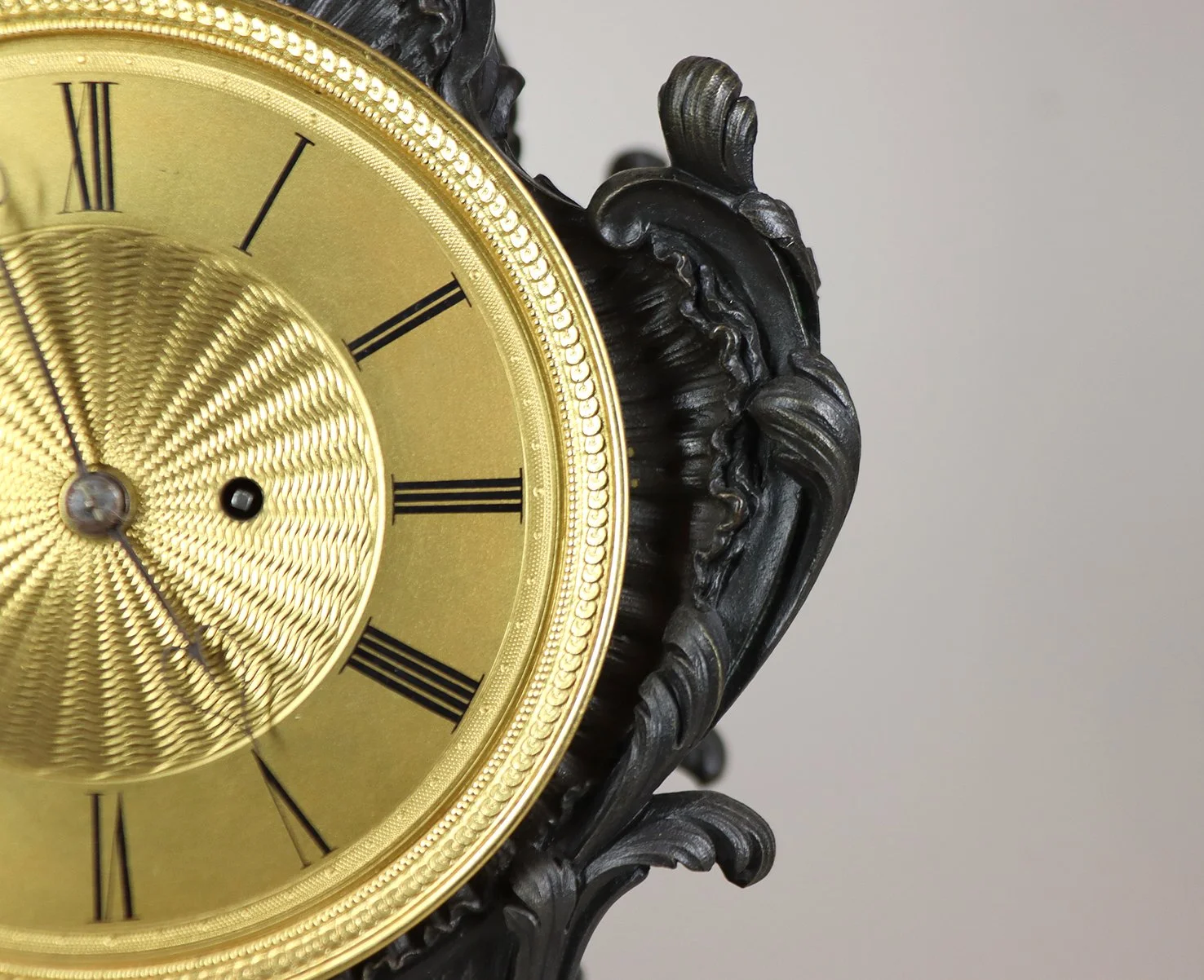 Image 13 of 14
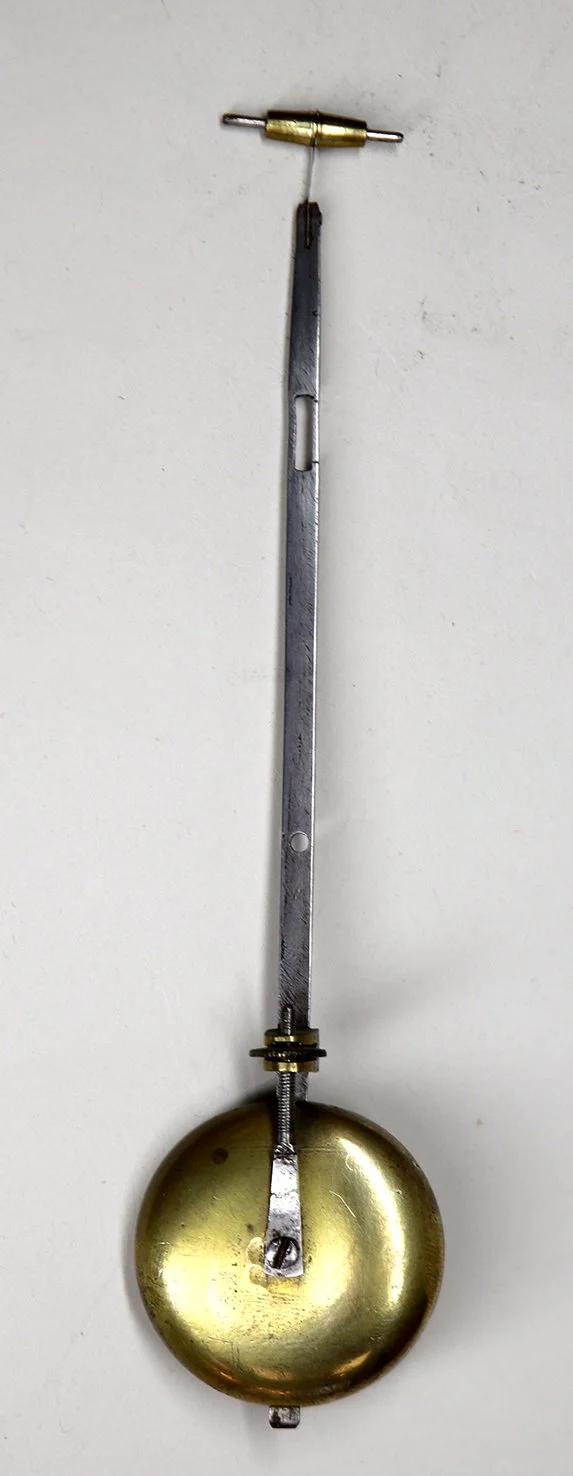 Image 14 of 14